名医论艾
Famous physicians on mugwort
Eight physicians across two millennia of Chinese medicine, and what they wrote about mugwort (艾叶).
← Swipe to browse all 8 physicians →
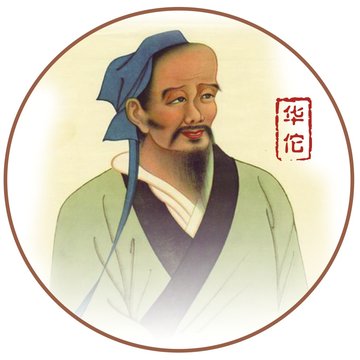
Hua Tuo
145–208
Read full bio
Courtesy name Yuanhua. From Qiao, Kingdom of Pei (present-day Bozhou, Anhui). His Zhong Zang Jing (Canon of the Central Viscera) records one prescription containing mugwort leaf (ai ye); Hua Tuo’s Magic Formulas (Hua Tuo Shen Fang) records 23. Across both works, Hua Tuo used mugwort widely in internal medicine, surgery, and gynecology.
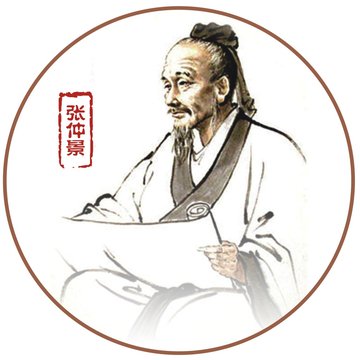
Zhang Zhongjing
150–219
Read full bio
Given name Ji. From Niyang, Nan Commandery (present-day Nanyang, Henan). His Treatise on Cold Damage Disorders (Shang Han Lun) and Essentials from the Golden Cabinet (Jin Gui Yao Lue) are revered by later physicians as classics of Chinese medicine, and his formulas are honored as “the ancestor of all prescriptions.” The Jin Gui Yao Lue records two mugwort formulas: Bai Ye Tang and Xiong Gui Jiao Ai Tang.
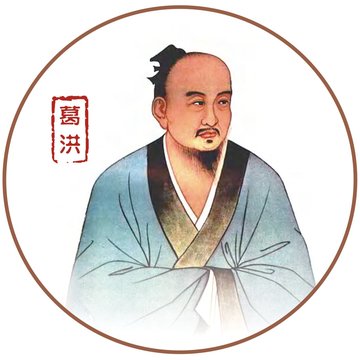
Ge Hong
261–341
Read full bio
Courtesy name Zhichuan (the original poster reads “Yachuan” — corrected). Styled himself “Baopuzi.” From Jurong, Danyang, in the Jin dynasty (present-day Jurong, Jiangsu). Author of Emergency Formulas to Keep at Hand, later expanded as Zhou Hou Bei Ji Fang — 8 volumes, 73 chapters, chiefly on acute and infectious disease. Of the 69 surviving chapters, 15 (21.74%) apply or cite mugwort prescriptions.

Sun Simiao
581–682
Read full bio
Honored as “Sun Zhenren” (the Immortal Sun). From Huayuan, Jingzhao (present-day Yaozhou, Shaanxi). A renowned Tang-dynasty physician, author of Bei Ji Qian Jin Yao Fang and its sequel Qian Jin Yi Fang, which together record 60 mugwort prescriptions.

Wang Tao
670–755
Read full bio
From Mei County, Tang dynasty (present-day Meixian, Shaanxi — the original poster reads “Qishan”, corrected). His compilation Wai Tai Mi Yao drew on roughly 60 medical works and widely collected folk remedies: 40 volumes, 1,104 sections, over 6,900 prescriptions, 15 containing mugwort.

Xue Ji
c.1487–1558
Read full bio
Courtesy name Xinfu, styled “Lizhai.” From Wu Commandery, Ming dynasty (present-day Suzhou, Jiangsu). His Wai Ke Shu Yao records 8 moxibustion prescriptions and the principle: “for those in pain, moxa until the pain stops; for those without sensation, moxa until sensation returns.” His Fu Ke Cui Yao records five mugwort formulas.

Li Shizhen
1518–1593
Read full bio
Courtesy name Dongbi, styled “Binhu.” From Qizhou, Ming dynasty (present-day Qichun, Hubei). In his Compendium of Materia Medica he praised Qizhou mugwort as the finest, calling it “Qi Ai.” The book discusses mugwort in 300-plus passages, with 164 mugwort-based prescriptions.

Shen Jin’ao
1717–1776
Read full bio
Courtesy name Qianlü, styled “Jimen,” “Zaiping,” and later “Zunsheng Laoren.” From Wuxi, Jiangsu. His Fu Ke Yu Chi records numerous mugwort prescriptions.